Housing and public utilities
 One of the main objectives of reform in housing and communal services of Ukraine is to increase energy efficiency up to levels capable to provide at least 20-30 % of the actual cost of fuel and energy resources. Currently, energy consumers do not pay for the amount of consumed energy, paying for normalized being not interested in reducing energy consumption. Consumption rate of hot water is too high – about 1.5 times higher against the actual consumption. The methodology of calculating tariffs for thermal energy to the population is based on 1 m2 of floor area. Owners of flat with height of 5 m and 2.5 m pay the same amount of money, although energy cost of the first flat is about 1.5 times higher. Thus, the owner of less comfortable housing subsidizes the owner of more comfortable flat. When calculating tariffs for thermal energy, it is necessary to move from UAH/m2 to UAH/m3 which fully takes into account all the factors that affect energy cost.
The heat supply system also requires a major restructuring process, using mainly combined production of heat and power, economic efficiency and environmental compliance, establishing clear economic and technically sound system of relationships in the chain: consumer – provider of services – utility company.
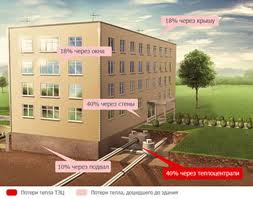
We also need to continue implementing plans to replace gas utilities and transfer of domestic boilers to alternative fuels. However, it is necessary to change the entire system. Although the share of housing in the country’s GDP is 6.5%, industry consumes 30% of all energy in the country. More than 11% of heat networks disrepair. The total energy losses approach 30%. Every fifth boiler is operated for more than 20 years. Typically, this is an old soviet-style boiler with an efficiency of 70-80%. Now thermal energy in housing is mainly produced by gas – expensive imported fuel. In 2012, the needs of housing – communal services were 10 billion cubic meters of natural gas. This is more than $4 billion considering prices of Gazprom.
It is necessary to carry out replacement and upgrading of low-power boilers, which are currently being exploited in the municipal power system and have low efficiency (about 70%), while modern boilers have efficiency of 95%.
Thus, before industry can reduce the loss of energy to European parameters and break the monopoly of gas in the production of thermal energy, which means to convert boilers to alternative fuels.
Our experts will conduct energy audits of enterprises and to develop a plan containing targets for energy efficiency and measures to improve energy efficiency , carry out the calculation of the results , in volume and value terms , including the economic effect of the implementation of the proposed measures. Within the energy consulting, our specialists will develop your solutions to improve energy efficiency and energy savings in various sectors of the economy, including the following services :• Pre- feasibility study• Preparation of feasibility study• Development of business plans• Energy audit of• Preparation of projects for funding through credit lines of international financial institutions
Our experts will conduct energy audits of enterprises developing a plan containing targets for energy efficiency and measures to improve energy efficiency, carrying out the calculation of results in volume and value terms, including economic effect from implementation of the proposed measures. Within the energy consulting, our specialists will develop your solutions to improve energy efficiency and energy savings in various sectors of the economy, including following services:
- Pre-feasibility study
- Preparation of feasibility study
- Development of business plans
- Energy audit
- Preparation of projects for funding through credit lines of international financial institutions

